Reading
Reading at John Wilkinson Primary School and Nursery
Opening minds and sparking imaginations—one book at a time.
Our Intent
At John Wilkinson Primary School and Nursery, we believe reading is the foundation for curiosity, creativity, and lifelong learning. From the very beginning of their journey with us, we inspire children to develop a love of books—helping them become ready to explore ideas, responsible in their choices, and respectful of the diverse voices and perspectives they encounter.
Reading is more than a skill; it is a doorway to imagination. Through stories and texts, children can dream, create, and discover new worlds, building the confidence to express themselves and think creatively. These experiences not only strengthen their understanding of the wider curriculum but also encourage independence and critical thinking.
Our aim is for every child to leave John Wilkinson as an enthusiastic, capable reader—equipped with the knowledge, creativity, and curiosity to shape their own future. By fostering a love of reading, we open minds, spark ideas, and empower children to see endless possibilities.
Mission Statement
At John Wilkinson Primary School and Nursery, our mission is to ensure every child becomes a confident, fluent reader who loves books and values the power of reading. We achieve this by:
- Building strong foundations in phonics through the Little Wandle programme, giving children the essential skills to decode and understand text.
- Guiding progression with John Murray’s Reading Rocketeers and Explorers, ensuring structured development of comprehension and critical thinking.
- Promoting reading for pleasure by creating a rich reading culture—offering diverse, high-quality texts, dedicated story times, and opportunities for children to choose and enjoy books that spark their imagination.
- Embedding our school values—Ready, Responsible, Respectful—into every aspect of reading, encouraging children to approach texts with curiosity, care, and an open mind.
- Fostering creativity and imagination through stories and literature, helping children to explore new worlds, ideas, and perspectives.
Through these approaches, we aim to empower every child to read with confidence, think deeply, and develop a lifelong love of reading.
Reading at Home Support
Reading with your child is one of the most powerful, enjoyable, and beneficial activities you can do at home. It helps them develop personally, achieve at school, and strengthens your relationship. At John Wilkinson, we want EVERY child (and grown-up!) to LOVE reading as much as we do.
Reading together is much more than hearing your child read their school book. Here are some ideas to help you nurture a lifelong love of reading:
Top Tips for Reading at Home
- Find a time that works for your family – after school, after tea, at bedtime, or even in the morning.
- Support phonics practice – EYFS children bring home phonics cards to help with sounds.
- Read to your child – model expressive reading with pitch, tone, pauses, and character voices.
- Explore a variety of texts – not just school books! Try picture books, comics, fact books, joke books, recipes, menus, and programmes.
- Talk about what you read – ask questions about what might happen next and what has already happened.
- Share your favourites – let your child see what you love to read.
- Visit the local library – it’s free and full of wonderful books!
- Make story time a routine – bedtime stories can be a special moment for children and parents/carers to share.
- Don’t worry about book bands – every child’s reading journey is different. Staff regularly assess progress and ensure children are secure before moving on.
If you’d like more advice on supporting your child’s reading, please speak to their teacher.
Nursery Rhymes, Poems and Limericks
Experts say that if a child knows eight nursery rhymes by heart by age four, they are often among the best readers and spellers by Year 3. Learning and reciting rhymes also boosts communication and language skills. This is one of the best things you can do at home to positively influence reading. We sing nursery rhymes and learn poems daily in Nursery, EYFS and KS1 to help support this.
Book Recommendations
Children often love series books—and that’s okay! If you’d like to branch out, check out our Branching Out Book Posters for ideas to expand their reading choices.
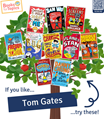

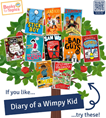
100 Books to Read Before You Leave John Wilkinson
We LOVE reading at John Wilkinson! Below is our list of 100 books we think every child should enjoy before leaving our school. It’s not exhaustive—there are so many brilliant books out there—but it’s a great starting point for families.
|
Year Group |
Recommended Books |
|
Nursery & Reception |
The Very Hungry Caterpillar – Eric Carle |
|
Year 1 |
Dogger – Shirley Hughes |
|
Year 2 |
The Owl Who Was Afraid of the Dark – Jill Tomlinson |
|
Year 3 |
Charlotte’s Web – E.B. White |
|
Year 4 |
Varjak Paw – S.F. Said |
|
Year 5 |
Holes – Louis Sachar |
|
Year 6 |
Goodnight Mister Tom – Michelle Magorian |